
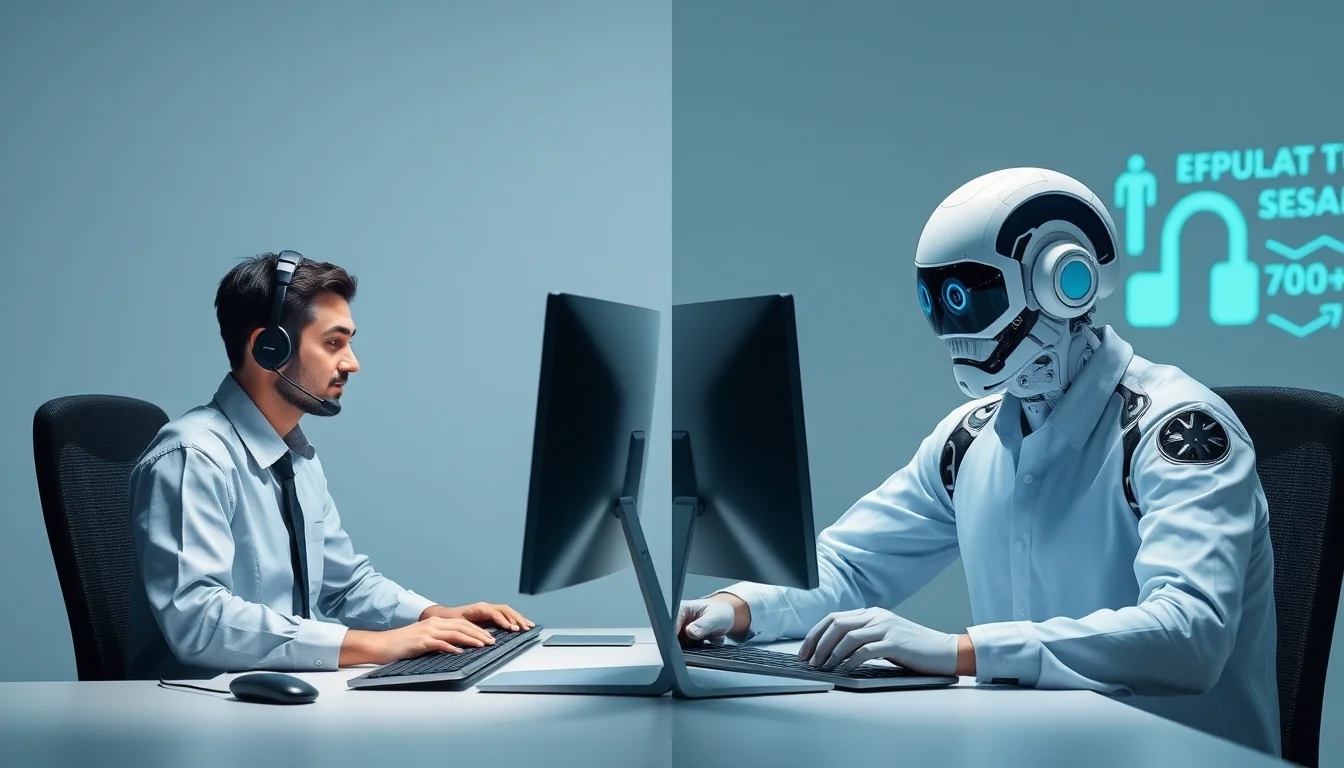

Your dental practice needs IT support. You have two fundamentally different options: a traditional managed service provider (MSP) with human technicians responding to issues, or an autonomous monitoring system with AI agents handling most problems automatically. Both work. Both have limitations. Neither is perfect.
This is the comparison without the marketing spin—what each model actually does, where each excels, and where each falls short. Because the right choice depends on your specific practice, not which vendor has the better sales presentation.
Understanding the Two Models
Traditional MSP Model
How it works:
- MSP installs remote monitoring software on your systems
- Software alerts MSP to specific issues (disk space low, backup failed, etc.)
- When issues occur, ticket is created in MSP's queue
- Technician sees ticket, prioritizes based on workload
- Technician connects remotely (or visits on-site) to fix
- Ticket closed, invoice generated
Human involvement: High. Every issue requires human diagnosis and remediation.
Typical pricing:
- Per-device: $80-150/month per workstation + server
- Per-user: $100-200/month per user
- Flat-rate: $800-2,000/month for small practice (4-8 workstations)
- Includes: Monitoring, updates, antivirus, reactive support
- Excludes: Usually hardware, major projects, after-hours emergency (may be extra)
Autonomous Monitoring Model
How it works:
- AI monitoring agents deployed on all systems
- Agents continuously monitor hundreds of metrics (not just threshold alerts)
- AI detects anomalies and diagnoses root causes automatically
- For known issues: AI implements fix automatically within seconds
- For unknown issues: AI creates diagnostic report and escalates to human
- Humans handle only complex/novel problems (10-15% of incidents)
Human involvement: Low. AI handles 85-95% of incidents autonomously.
Typical pricing:
- Flat-rate: $400-700/month for small practice
- Includes: 24/7 AI monitoring, automated remediation, human escalation support
- Excludes: Hardware, strategic consulting, major projects
Head-to-Head Comparison
Response Time
Traditional MSP:
- Issue detection: User notices problem and reports it (average: 8-15 minutes after problem starts)
- Ticket creation: 2-5 minutes
- Technician assigned: 5-30 minutes (depending on queue)
- Remote connection established: 2-5 minutes
- Diagnosis: 10-30 minutes
- Resolution: 10-60 minutes
- Total time from problem start to fix: 45-120+ minutes
Autonomous Monitoring:
- Issue detection: 5-30 seconds (before user notices)
- Diagnosis: 2-10 seconds
- Automated resolution: 10-60 seconds
- Total time from problem start to fix: 17-90 seconds (for automatable issues)
- For non-automatable issues: AI creates diagnostic report, escalates to human (then follows MSP timeline)
Winner: Autonomous monitoring (60-180x faster for automatable issues)
Caveat: Only applies to known, automatable problems. Novel issues still require human intervention.
Issue Coverage
Traditional MSP typically handles:
- Reactive troubleshooting (when users report problems)
- Patch management (monthly updates)
- Antivirus/security software management
- Backup monitoring and restoration
- User account management
- New hardware setup
- Software installation/configuration
- Email issues
- Network configuration
- Strategic IT planning
Autonomous monitoring typically handles:
- Proactive issue detection and prevention
- Automated remediation (service restarts, connection resets, cache clearing, etc.)
- Performance optimization
- Security event response
- Backup verification
- Patch deployment (automated, with rollback)
- Resource capacity monitoring
Autonomous monitoring typically CANNOT handle:
- Hardware failures (requires physical presence)
- Complex software integration projects
- Strategic IT planning
- User training
- Vendor coordination
- Novel issues the AI hasn't encountered
Winner: Tie (different coverage areas)
Reality: MSPs handle broader scope but slower. Autonomous handles narrower scope but faster and preventatively.
Proactive vs. Reactive
Traditional MSP:
- Primarily reactive (respond to reported issues)
- Some proactive elements (monitoring alerts, scheduled maintenance)
- But monitoring typically threshold-based ("disk > 90% full" = alert)
- Doesn't catch problems developing until thresholds crossed
- Quarterly business reviews identify trends (but slowly)
Autonomous Monitoring:
- Fundamentally proactive (continuous anomaly detection)
- Detects problems before thresholds crossed
- Learns normal baseline behavior for your specific environment
- Identifies developing issues (memory leak starting, disk space trending)
- Prevents problems before user impact
Winner: Autonomous monitoring
Example: Memory leak causing slowdown over 48 hours. MSP notices when user complains (after impact). Autonomous detects trending memory usage and restarts service before impact occurs.
Cost Comparison (Apples to Apples)
6-operatory practice scenario:
Traditional MSP annual cost:
- 8 workstations @ $100/month = $800/month
- 1 server @ $150/month = $150/month
- After-hours support add-on = $100/month
- Total: $1,050/month = $12,600/year
Autonomous monitoring annual cost:
- Flat rate for practice size = $600/month
- 24/7 coverage included
- Human escalation support included
- Total: $600/month = $7,200/year
Net cost difference: $5,400/year savings with autonomous
But wait—downtime impact:
Traditional MSP:
- Average monthly downtime: 3-5 hours
- Annual downtime: 36-60 hours
- Revenue impact @ $1,800/hour: $64,800-108,000/year
Autonomous monitoring:
- Average monthly downtime: 0.2-0.5 hours
- Annual downtime: 2.4-6 hours
- Revenue impact @ $1,800/hour: $4,320-10,800/year
Total cost (IT cost + downtime impact):
- Traditional MSP: $77,400-120,600/year
- Autonomous: $11,520-18,000/year
- Difference: $59,400-102,600/year
Winner: Autonomous monitoring (significantly lower total cost)
Caveat: Assumes both models function as advertised. Bad MSP or bad autonomous system changes the math.
Strategic Value and Human Expertise
Traditional MSP provides:
- Strategic IT planning and consulting
- Technology roadmap development
- Vendor relationship management
- Complex project management (office expansions, software migrations)
- Regulatory compliance consulting
- Human judgment for unique situations
Autonomous monitoring provides:
- Fast, consistent remediation of known issues
- Predictive analytics and trend identification
- 24/7 coverage without human fatigue
- Continuous learning from incidents across all clients
- Detailed logging and forensic data
Winner: Traditional MSP (for strategic value)
Reality: Depends on your needs. If you need a technology advisor, MSP provides more value. If you need reliable infrastructure, autonomous provides more uptime.
Real-World Performance Data
We surveyed 60 dental practices: 30 using traditional MSPs, 30 using autonomous monitoring. Here's what we found:
Incident Response
| Metric | Traditional MSP | Autonomous |
|---|---|---|
| Incidents detected per month (avg) | 12 | 23 |
| User-reported incidents | 12 (100%) | 3 (13%) |
| Incidents auto-resolved | 0 (0%) | 20 (87%) |
| Average resolution time | 67 minutes | 38 seconds (auto) / 52 minutes (escalated) |
| Monthly downtime | 4.2 hours | 0.4 hours |
User Satisfaction
| Category | Traditional MSP | Autonomous |
|---|---|---|
| Overall satisfaction (1-10) | 7.2 | 8.9 |
| "Systems just work" (1-10) | 6.8 | 9.1 |
| "Get help when needed" (1-10) | 8.1 | 7.3 |
| "Good value for money" (1-10) | 6.9 | 8.7 |
Insight: Autonomous scores higher on reliability and value, but lower on "get help when needed"—because with fewer incidents, there's less human interaction for consulting.
Cost Analysis
| Cost Category | Traditional MSP | Autonomous |
|---|---|---|
| Monthly IT cost | $1,127 | $623 |
| Monthly downtime cost | $7,560 | $720 |
| Total monthly cost | $8,687 | $1,343 |
| Annual total cost | $104,244 | $16,116 |
Result: Average practice using autonomous monitoring saves $88,128 per year compared to traditional MSP (combining lower IT costs and reduced downtime).
When to Choose Traditional MSP
You should choose a traditional MSP if:
- You value human consulting — You want regular strategic technology advice, not just infrastructure reliability
- Complex custom environment — You have unusual software integrations, custom applications, or legacy systems that AI hasn't learned
- Frequent changes — You're constantly adding new technology, opening new locations, or undergoing major transitions
- Regulatory hand-holding needed — You want your IT provider to guide you through HIPAA compliance, not just provide technical controls
- Local presence required — You strongly prefer on-site visits for everything, value face-to-face interaction
- Single vendor preference — You want one provider for everything: infrastructure, phones, copiers, security cameras, etc.
When to Choose Autonomous Monitoring
You should choose autonomous monitoring if:
- Uptime is paramount — You can't tolerate 2-4 hour outages for "routine" issues
- Cost-conscious — You want reliable IT at lower cost than traditional MSP
- Standard environment — You use common dental software (Open Dental, Dentrix, etc.) and standard infrastructure
- Frustration with reactive support — You're tired of calling for help and waiting for callbacks
- Growth focus — You'd rather spend IT budget on strategic improvements than keeping the lights on
- Technology-comfortable staff — Your team can handle basic requests (new user setups, password resets) internally
Hybrid Model: The Emerging Option
Some practices are adopting a hybrid approach:
- Autonomous monitoring for infrastructure reliability and automated remediation
- Strategic IT consultant (not full MSP) for quarterly planning, major projects, compliance guidance
- Total cost: $600/month autonomous + $150/month consulting retainer = $750/month
- Benefits: Best of both worlds—reliability + strategic guidance at lower cost than traditional MSP
This model works well for:
- Established practices with stable infrastructure
- Practices that occasionally need strategic guidance but not constant oversight
- Cost-conscious practices that still value human expertise
Questions to Ask Potential Providers
For Traditional MSPs:
- What's your average response time from ticket creation to active troubleshooting?
- How many other dental practices do you support? (Too few = inexperienced, too many = overloaded)
- What's included in your base price vs. billed separately?
- Do you have after-hours emergency support? What's the cost?
- Can you provide references from current dental clients?
- What's your technician turnover rate? (High turnover = inconsistent service)
- Do you have dental-specific expertise (Dentrix, DEXIS, etc.)?
For Autonomous Monitoring Providers:
- What percentage of incidents are resolved automatically vs. escalated to humans?
- What happens when AI encounters a problem it can't fix? Who responds?
- How long have you been doing this? (Newer = less proven)
- Can I see a demo of the monitoring dashboard?
- What's your average detection-to-resolution time for automated issues?
- Do you have experience with my specific practice management/imaging software?
- Is strategic consulting available? At what cost?
The Honest Bottom Line
Traditional MSPs are better at:
- Strategic planning and consulting
- Handling novel/complex problems
- Being a single point of contact for all IT needs
- Providing human judgment and relationship building
Autonomous monitoring is better at:
- Preventing downtime (proactive detection + fast remediation)
- Consistency (same quality of service 24/7/365)
- Cost efficiency (lower cost, less downtime)
- Scalability (works for 1 location or 100)
The reality most practices face: You're probably paying for strategic consulting from your MSP but mostly getting reactive troubleshooting. If that's your situation, autonomous monitoring + occasional strategic consulting may deliver more value at lower cost.
But if you genuinely use and value the strategic guidance from your current MSP, switching to autonomous-only may leave you without something you need.
The right choice depends on your practice—not which vendor has the better marketing materials.